
Inverted Triangle Body Shape
An Inverted Triangle Body Shape typically features broader shoulders or a wider upper body with comparatively narrower hips. Learn the 7 common signs, typical inverted triangle body measurements, shoulder-to-hip proportions, and how this female body type differs from rectangle, hourglass, pear and apple shapes.
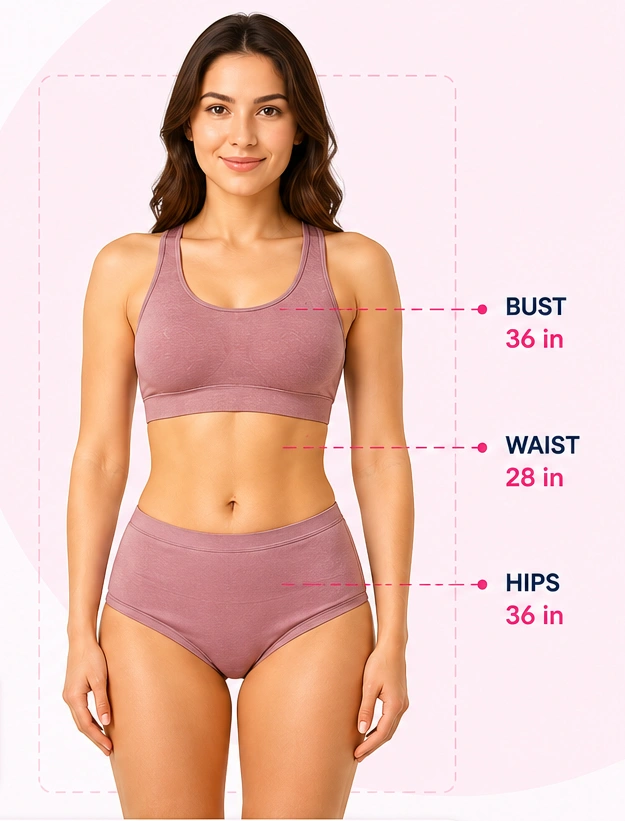
What Is an Inverted Triangle Body Shape?
An Inverted Triangle Body Shape generally describes a figure where the shoulders or upper torso appear proportionally wider than the hips. This creates a silhouette that is broader toward the top and gradually becomes narrower toward the lower body.
A typical inverted triangle body type may have broad shoulders, a relatively prominent bust or chest, comparatively narrow hips and less lower-body width. However, individual proportions vary, and not every woman with this shape will have exactly the same measurements.
The Inverted Triangle Body Shape is based on proportional relationships rather than weight, height or clothing size. A woman can therefore have this body shape at many different sizes. The important comparison is how the shoulders, bust, waist and hips relate to one another.
If you are unsure which female body shape best describes you, compare your measurements with the other Female Body Types before choosing your closest match.
7 Signs of an Inverted Triangle Body Shape
Several characteristics can help identify an inverted triangle female body. You do not need to match every sign perfectly.
Broader shoulders: the shoulders are usually one of the widest areas of the body and may extend visibly beyond the hips.
Narrower hips: the hip area is generally less wide than the shoulders or upper torso.
Upper-body emphasis: the upper torso can appear more prominent than the lower body when viewed from the front.
Shoulders wider than hips: this shoulder-to-hip difference is one of the clearest proportional indicators of the shape.
Relatively straight hips: the outer hip line may show less outward width than pear or hourglass figures.
Variable waist definition: the waist can be defined or relatively straight, so waist size alone does not identify this shape.
V-shaped silhouette: broader upper proportions and narrower lower proportions can create an overall V-like visual outline.
Inverted Triangle Body Shape Measurements
There is no universal set of inverted triangle body measurements. Instead, classification depends primarily on the relationship between the upper and lower body.
| Body Area | Common Pattern | Main Comparison | What It Shows |
|---|---|---|---|
| Shoulders | Often the widest area | Shoulders vs hips | Upper-to-lower body balance |
| Bust | Can be prominent | Bust vs hips | Upper torso proportion |
| Waist | Can vary considerably | Waist vs bust and hips | Degree of waist definition |
| Hips | Comparatively narrower | Hips vs shoulders | Lower-body width |
Accurate measurements are important when comparing body proportions. Use our How to Measure Bust, Waist and Hips guide before entering measurements into a calculator.
Typical Inverted Triangle Body Measurements Example
An Inverted Triangle Body Shape cannot be identified from bust, waist and hip measurements alone when shoulder width is an important part of the classification. Shoulder-to-hip balance should also be considered.
Example only: a woman might have broad shoulders, a 38-inch bust, 30-inch waist and 34-inch hips. If her shoulders are clearly wider than her hips, these proportions could resemble an inverted triangle body type. These numbers are illustrative rather than a universal formula.
Another woman could have completely different circumference measurements but still show the same upper-to-lower body relationship. This is why proportional differences are more informative than any single measurement.
You can compare your bust, waist and hips using our Bust Waist Hip Measurements Calculator .
Shoulders Wider Than Hips: The Key Inverted Triangle Feature
The most recognizable feature of an Inverted Triangle Body Shape is usually the relationship between shoulder and hip width. When the shoulders appear noticeably broader than the hips, the silhouette becomes wider at the top and narrower toward the bottom.
This is different from a pear figure, where the hips dominate the silhouette, and from an hourglass figure, where the upper and lower body are generally more balanced.
Because shoulder measurement methods can vary, visual proportions and consistent measurement technique should be considered together rather than relying on an isolated number.
How to Measure for an Inverted Triangle Body Shape
Shoulders
Measure your shoulder area consistently because shoulder-to-hip proportion is particularly important for this female body type.
Bust
Wrap the measuring tape around the fullest part of your bust while keeping it approximately level.
Waist
Measure your natural waist without pulling the tape excessively tight or intentionally changing your posture.
Hips
Measure around the fullest part of your hips and buttocks and keep the tape as level as possible.
For additional instructions, read our Body Measurements Guide.
Inverted Triangle Body Shape vs Rectangle Body Shape
▽ Inverted Triangle
The shoulders or upper torso are generally wider than the hips, creating stronger upper-body emphasis.
▯ Rectangle
The shoulders and hips tend to be more balanced, producing a straighter and more even upper-to-lower silhouette.
The clearest distinction is usually shoulder-to-hip balance. A Rectangle Body Shape typically maintains more similar upper and lower widths, while the Inverted Triangle Body Shape becomes visibly narrower toward the hips.
Inverted Triangle Body Shape vs Hourglass Body Type
▽ Inverted Triangle
Upper-body width is generally more dominant, while the hips are comparatively narrower.
⌛ Hourglass
Bust and hips are generally more balanced, while the waist shows stronger inward definition.
An Hourglass Body Type generally has stronger balance between the upper and lower body. In an inverted triangle figure, shoulder or upper-torso width is more dominant in relation to the hips.
Inverted Triangle Body Shape vs Pear Body Shape
The inverted triangle and pear are useful to compare because their dominant proportions generally occur on opposite halves of the body.
An Inverted Triangle Body Shape has greater upper-body width relative to the hips. A Pear Body Shape generally has greater lower-body width, with hips that appear wider than the shoulders or bust.
Simple comparison:
Inverted Triangle = broader top + narrower bottom.
Pear = narrower top + broader bottom.
Inverted Triangle Body Shape vs Apple Body Shape
Both shapes can show upper-body prominence, but they are not the same. For an inverted triangle body type, the shoulder-to-hip difference is usually the defining feature.
An Apple Body Shape generally shows more visual fullness through the central or upper torso and less waist definition. The inverted triangle is characterized more specifically by broader shoulders or upper-body width relative to the hips.
Does an Inverted Triangle Body Shape Have a Defined Waist?
It can. Waist definition varies considerably within this body type. Some women with an Inverted Triangle Body Shape have a visibly defined waist, while others have a straighter torso.
This is why waist size should not be used as the only classification factor. The relationship between the shoulders and hips is generally more important when distinguishing an inverted triangle from other female body shapes.
Is Inverted Triangle the Same as an Athletic Body Shape?
Not necessarily. The term “athletic body shape” is sometimes used informally for figures with broader shoulders, but it does not mean that every inverted triangle female body belongs to an athlete.
Likewise, exercise habits do not determine body-shape classification. An athlete can have an hourglass, pear, rectangle, apple or Inverted Triangle Body Shape.
Does Weight Determine an Inverted Triangle Body Shape?
No. Body weight alone cannot identify an Inverted Triangle Body Shape. Two women at the same weight may have very different shoulder, bust, waist and hip proportions.
Similarly, people at substantially different weights can have the same general body-shape pattern if their upper-to-lower body proportions are similar.
Can Any Clothing Size Have an Inverted Triangle Body Type?
Yes. Clothing size is not a body-shape category. An inverted triangle body type can occur across different heights, weights and clothing sizes because classification is based on relative proportions.
A person’s absolute measurements can increase or decrease while the basic relationship of broader shoulders and narrower hips remains similar.
Can an Inverted Triangle Body Shape Change Over Time?
Body measurements and proportions can change over time. If the relationship between the shoulders, bust, waist and hips changes significantly, another body-shape category may become a closer match.
For that reason, the Inverted Triangle Body Shape should be understood as a description of current proportions rather than a permanent label.
What Does an Inverted Triangle Body Shape Look Like?
Viewed from the front, the silhouette typically begins wider around the shoulders and gradually becomes narrower toward the hips. This creates the visual impression of an inverted triangle or V shape.
If measurements alone are difficult to visualize, use our Body Shape Visualizer to explore how different shoulder, bust, waist and hip proportions affect overall body shape.
You can also compare the five common female shapes using our Body Type Chart for Women.
How Do I Know If I Have an Inverted Triangle Body Shape?
Begin by taking consistent shoulder, bust, waist and hip measurements. Then compare the upper-body measurements with the width and circumference of the lower body.
If your shoulders are noticeably wider than your hips and your upper body creates more visual width than your lower body, your proportions may resemble an Inverted Triangle Body Shape.
For an automatic proportional comparison, use the Body Shape Calculator. You can also follow our What Body Shape Am I? guide to compare all major female body types step by step.
Why Accurate Waist and Hip Measurements Matter
Measurement consistency matters when comparing body proportions. Changing the position of the measuring tape can alter the recorded circumference and affect proportional comparisons.
Use consistent anatomical measurement points whenever you repeat your waist or hip measurements.
Authoritative external reference: The World Health Organization report on waist circumference and waist-to-hip ratio provides standardized information about measuring waist and hip circumference.
Body Proportions and Anthropometric Measurements
Anthropometry refers to the measurement of human body dimensions. Circumferences and other measurements can be used to describe physical dimensions and proportional relationships.
An Inverted Triangle Body Shape, however, is a general descriptive body-shape classification. It should not be treated as a medical diagnosis or a clinical assessment.
Authoritative external reference: For general background on measuring human body dimensions, see the NCBI overview of Anthropometric Measurement .
Can Inverted Triangle Body Measurements Be in Inches or CM?
Yes. Measurements can be taken in either inches or centimeters. The important point is that all measurements entered into a comparison or calculator use the same unit.
One inch equals exactly 2.54 centimeters. A consistent conversion changes the numerical values but does not change the proportional relationship between the measurements.
Authoritative external reference: See NIST guidance on SI units of length for official information about length measurements.
Is an Inverted Triangle Body Shape a Measure of Health?
No. An Inverted Triangle Body Shape is simply a way of describing external body proportions. It does not determine health, fitness, body composition or physical attractiveness.
Likewise, no female body type is inherently better than another. Inverted triangle, hourglass, pear, apple and rectangle are descriptive labels used to organize common proportional patterns.
Inverted Triangle vs Other Female Body Types
| Body Shape | Upper Body | Waist | Hips | Main Visual Feature |
|---|---|---|---|---|
| Inverted Triangle | Broader | Variable | Narrower | Upper-body dominant |
| Hourglass | Balanced with hips | More defined | Balanced with bust | Balanced curves |
| Pear | Narrower | Often defined | Broader | Lower-body dominant |
| Rectangle | Balanced | Less defined | Balanced | Straighter silhouette |
| Apple | Can be prominent | Less defined | Often narrower | Central torso emphasis |
Explore Your Body Shape and Measurements
Inverted Triangle Body Shape FAQs
What is an Inverted Triangle Body Shape?
An Inverted Triangle Body Shape generally has shoulders or an upper torso that are proportionally wider than the hips, creating a top-heavy or V-shaped visual silhouette.
What are the main signs of an inverted triangle body type?
Common signs include broader shoulders, comparatively narrow hips, greater upper-body width and a silhouette that becomes narrower toward the lower body.
What measurements indicate an Inverted Triangle Body Shape?
There is no universal measurement set. The most important pattern is usually that the shoulders or upper body are proportionally wider than the hips.
Can an inverted triangle have a defined waist?
Yes. Waist definition varies. Some inverted triangle figures have a defined waist while others have a straighter torso, so shoulder-to-hip balance is generally more important.
What is the difference between inverted triangle and rectangle?
A rectangle generally has more balanced shoulder and hip proportions. An inverted triangle has greater width through the shoulders or upper body compared with the hips.
What is the difference between inverted triangle and pear?
An inverted triangle has greater upper-body width and narrower hips, while a pear shape generally has a narrower upper body and wider hips.
Is an inverted triangle body type always athletic?
No. Body shape describes proportions and does not indicate fitness level or exercise habits. A person does not need to be athletic to have an inverted triangle figure.
How can I check if I have an Inverted Triangle Body Shape?
Measure and compare your shoulders, bust, waist and hips. If your shoulders or upper body are noticeably wider than your hips, inverted triangle may be your closest body-shape match.
Do You Have an Inverted Triangle Body Shape?
Enter your shoulder, bust, waist and hip measurements into our free Body Shape Calculator to compare your proportions and see whether inverted triangle, rectangle, hourglass, pear or apple is your closest body-shape match.
🧮 Check My Body Shape →