
Pear Body Shape
A Pear Body Shape typically has hips that are proportionally wider than the bust or shoulders, often combined with a defined waist. Discover the 7 common signs, typical pear body measurements, body proportions and the differences between pear, hourglass and other female body shapes.
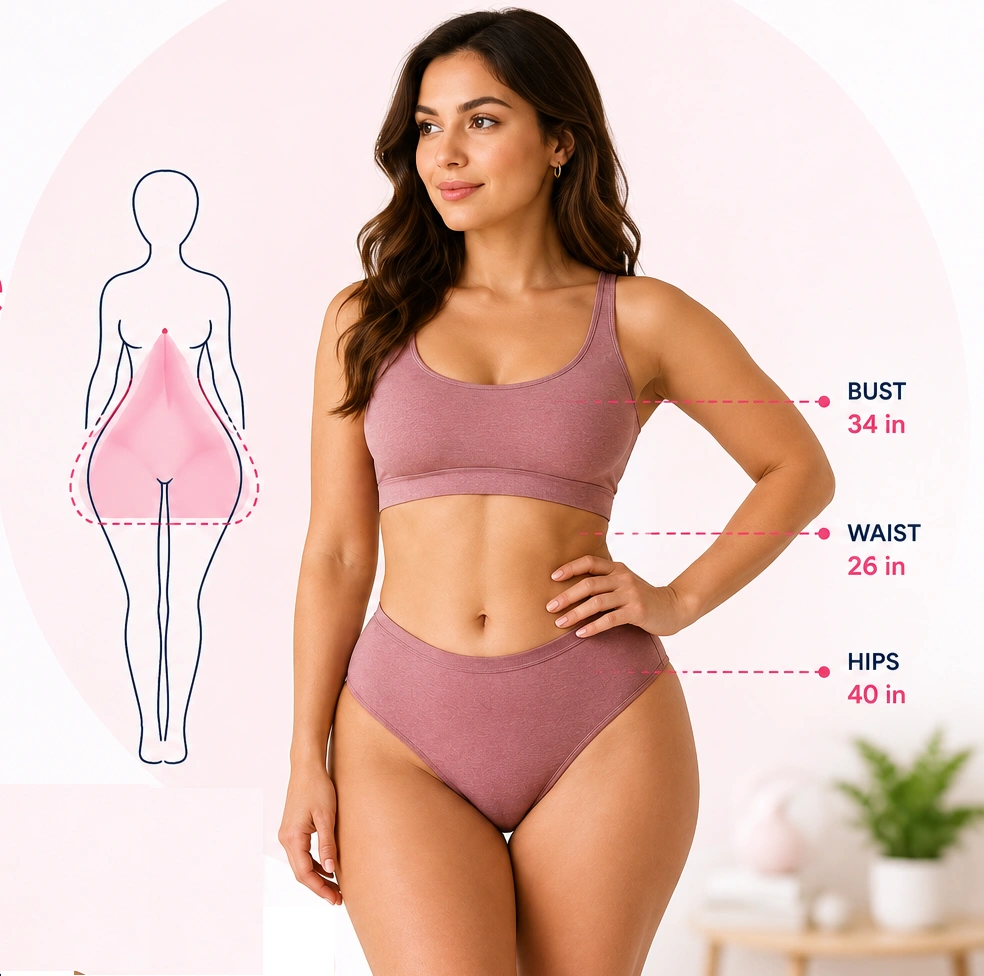
What Is a Pear Body Shape?
A Pear Body Shape generally describes body proportions where the hips are wider than the bust or shoulders. The waist is often noticeably narrower than the hips, creating a silhouette with more visual width through the lower body than the upper body.
A pear shaped body is also sometimes described as a triangle body shape. However, the important point is not the label itself. The classification comes from comparing body proportions, particularly the relationship between the shoulders, bust, waist and hips.
A woman does not need a specific clothing size, height or weight to have a Pear Body Shape. Women with very different body sizes can share similar proportions if their hips are noticeably wider than their upper body.
If you are unsure which shape best matches your measurements, compare the pear body type with the other Female Body Types before making a conclusion.
7 Common Signs of a Pear Body Shape
Individual bodies vary, but the following characteristics frequently appear in a pear shaped body.
Hips wider than bust: hip circumference or visual hip width is proportionally greater than the upper torso.
Narrower shoulders: the shoulder line may appear narrower than the widest part of the hips.
Defined waist: many pear body proportions show a noticeable difference between waist and hip measurements.
Lower-body emphasis: the overall silhouette becomes wider from the waist toward the hips.
Smaller upper-body proportion: the bust may be proportionally smaller than the hips.
Curved hip line: the transition from waist to hips may appear more pronounced.
Upper-lower imbalance: unlike an hourglass, the lower body is more dominant than the upper body.
Pear Body Shape Measurements Explained
There is no single set of measurements that every pear shaped woman must have. The relationship between the measurements is more important than the absolute numbers.
| Body Area | Common Pear Pattern | Main Comparison | What It Indicates |
|---|---|---|---|
| Shoulders | Relatively narrower | Shoulders vs hips | Shows upper-to-lower body balance |
| Bust | Often smaller than hips | Bust vs hips | Helps identify lower-body dominance |
| Waist | Usually narrower than hips | Waist vs hips | Shows waist definition |
| Hips | Proportionally wider | Hips vs bust/shoulders | Main pear-shape characteristic |
For accurate BWH measurements, follow our How to Measure Bust, Waist and Hips guide before comparing your values.
What Are Typical Pear Body Shape Measurements?
Pear body measurements vary considerably because the Pear Body Shape is based on proportions rather than one fixed measurement set. For example, a woman whose hips measure noticeably more than her bust may show a pear-like pattern when her other proportions support the same conclusion.
Example only: Bust 34 in – Waist 27 in – Hips 39 in. Here, the hips are 5 inches larger than the bust and the waist is smaller than the hips. This can resemble a pear-shaped proportional pattern, although shoulders and overall proportions should also be considered.
Do not treat an example such as 34-27-39 as a universal formula. Someone with 38-30-43 measurements could show a similar proportional pattern even though every measurement is larger.
Use our Bust Waist Hip Measurements Calculator to compare your own BWH measurements.
How to Measure for a Pear Body Shape
Shoulders
Measure consistently around or across the shoulder area according to the method used by your body-shape calculator.
Bust
Measure around the fullest part of your bust while keeping the tape approximately level.
Waist
Measure around your natural waist without pulling the measuring tape excessively tight.
Hips
Measure around the fullest part of your hips and buttocks while keeping the tape consistently positioned.
For complete instructions, see our Body Measurements Guide.
Pear Body Shape vs Hourglass Body Type
🍐 Pear Body Shape
The hips are proportionally wider than the bust or shoulders, creating greater emphasis through the lower body.
⧖ Hourglass Body Type
The bust and hips are more closely balanced, while the waist is noticeably narrower than both.
Both body shapes can have a defined waist, which is why they can sometimes be confused. The main difference is that an Hourglass Body Type generally has greater balance between the bust and hips, whereas a Pear Body Shape has proportionally wider hips.
Pear Body Shape vs Apple Body Shape
🍐 Pear
The hips form the widest or most dominant area and the waist may be clearly defined.
🍎 Apple
The middle torso generally shows more fullness and the waist may have less contrast with surrounding measurements.
The simplest distinction is where the proportions are most visually dominant. A pear shape is generally more lower-body dominant, while an apple shape is characterized more by the middle torso.
Pear Body Type vs Rectangle Body Shape
A rectangle body shape generally has shoulders, bust and hips that are more similar in overall proportion, with less contrast at the waist. A pear body type has a more noticeable difference between the upper body and hips.
If your hips are clearly wider than your shoulders and bust, a Pear Body Shape may be a closer match. If the shoulders, waist and hips create a straighter overall silhouette, rectangle may be more suitable.
Pear Body Shape vs Inverted Triangle
Pear and inverted triangle shapes represent almost opposite upper-to-lower body patterns. In a pear figure, the hips are proportionally wider. In an inverted triangle, the shoulders or upper body are proportionally wider than the hips.
This comparison also shows why shoulder measurements can improve body shape classification instead of relying only on bust, waist and hips.
Is a Pear Body Shape the Same as a Triangle Body Shape?
The terms pear body shape and triangle body shape are often used to describe a similar proportional pattern: a narrower upper body combined with wider hips.
Different body-shape systems may use slightly different terminology or classification thresholds. For this reason, it is better to focus on your actual body proportions than on the name alone.
Does Weight Determine a Pear Body Shape?
No. Weight alone cannot determine whether someone has a Pear Body Shape. Pear describes the proportional relationship between different areas of the body rather than total body weight.
A slim woman and a plus-size woman can both have pear-shaped proportions if their hips are wider relative to their bust or shoulders. Likewise, height does not determine whether someone belongs to a particular female body shape category.
Does Clothing Size Identify a Pear Body Type?
Clothing size and body shape describe different characteristics. A clothing size is designed primarily to help select garments, while a Pear Body Shape describes the relationship between the upper body, waist and hips.
Two women who wear the same dress size can have completely different body proportions. Similarly, women wearing different sizes can both have a pear body type.
Can a Pear Body Shape Change Over Time?
Body proportions can change over time. If bust, waist, hip or shoulder measurements change enough to alter their relative balance, the body shape that most closely describes those proportions can also change.
This is why a Pear Body Shape should be treated as a descriptive classification rather than a permanent biological category.
What Does a Pear Body Shape Look Like?
Viewed from the front, a pear shaped body generally becomes wider toward the hips. The shoulders and bust appear narrower in relation to the lower body, while the waist can create visible definition between the upper torso and hips.
If measurement numbers are difficult to visualize, use our Body Shape Visualizer to see a simplified representation of body proportions.
You can also compare pear with hourglass, apple, rectangle and inverted triangle proportions using our Body Type Chart for Women.
How Do I Know If I Have a Pear Body Shape?
Begin with accurate measurements rather than relying only on a mirror. Compare your hips with your bust and shoulders, then look at the amount of waist definition.
If the hips are noticeably wider than the upper body and the overall silhouette becomes wider toward the lower body, your proportions may match a Pear Body Shape.
Use our Body Shape Calculator to compare your measurements automatically, or follow What Body Shape Am I? for a step-by-step explanation.
Why Accurate Waist and Hip Measurements Matter
The result of any body-proportion comparison depends on the measurements entered. Changing the position of the tape, pulling it too tightly or measuring at a different anatomical point can produce different values.
For consistent comparisons, use the same measurement technique each time you record your waist and hip circumferences.
Authoritative external reference: The World Health Organization report on waist circumference and waist-to-hip ratio includes standardized guidance concerning waist and hip circumference measurement.
Body Measurements and Pear Body Proportions
The systematic measurement of human body dimensions is known as anthropometry. Measurements such as body circumferences can be used to describe dimensions and proportional relationships.
However, a Pear Body Shape is a general descriptive body-shape category, not a medical diagnosis or health classification.
Authoritative external reference: For background on anthropometric measurement, see the NCBI overview of Anthropometric Measurement .
Can Pear Body Measurements Be in Inches or CM?
Yes. You can measure your bust, waist and hips in either inches or centimeters. For proportional body-shape comparisons, all measurements should simply use the same unit.
One inch equals exactly 2.54 centimeters. Therefore, converting all measurements consistently does not change the proportional relationship between the bust, waist and hips.
Authoritative external reference: See NIST guidance on SI units of length for official information about length units.
Is a Pear Body Shape a Measure of Health?
No. A Pear Body Shape describes body proportions. It does not by itself determine health, fitness, body composition or attractiveness.
Body-shape labels such as pear, hourglass, apple, rectangle and inverted triangle are useful for describing proportional patterns, but they should not be interpreted as medical diagnoses.
Explore Your Female Body Shape
Pear Body Shape FAQs
What is a Pear Body Shape?
A Pear Body Shape generally has hips that are proportionally wider than the bust or shoulders, often combined with a narrower and more defined waist.
What measurements indicate a pear body type?
There is no universal measurement set. Pear proportions generally show hips that are noticeably larger than the bust or upper body, with the waist usually smaller than the hips.
Is pear body shape the same as triangle body shape?
The terms are often used for a similar pattern in which the hips are proportionally wider than the upper body, although classification systems can use different terminology.
What is the difference between pear and hourglass?
An hourglass generally has more balanced bust and hip proportions. A pear shape has hips that are proportionally wider than the bust or shoulders.
Can a slim woman have a Pear Body Shape?
Yes. Pear body type describes proportions rather than total body weight, so women of many different body sizes can have pear proportions.
Can a plus-size woman have a pear body type?
Yes. Clothing size or weight does not determine body shape. The relationship between the upper body, waist and hips is more relevant.
Can my Pear Body Shape change?
Yes. If body proportions change over time, the body-shape category that most closely matches those proportions can also change.
How can I check if I have a pear shaped body?
Measure your shoulders, bust, waist and hips and compare the values. If the hips are clearly wider than the upper body, your proportions may match a pear body shape.
Do You Have a Pear Body Shape?
Enter your bust, waist, hips and shoulder measurements into our free calculator to see whether your proportions most closely match a pear, hourglass, apple, rectangle or inverted triangle body shape.
🧮 Check My Body Shape →