
How to Measure Bust, Waist & Hips
Learn how to measure bust, waist and hips correctly using a flexible measuring tape. Accurate bust waist hip measurements make it easier to compare your body proportions and get a more reliable body-shape estimate.
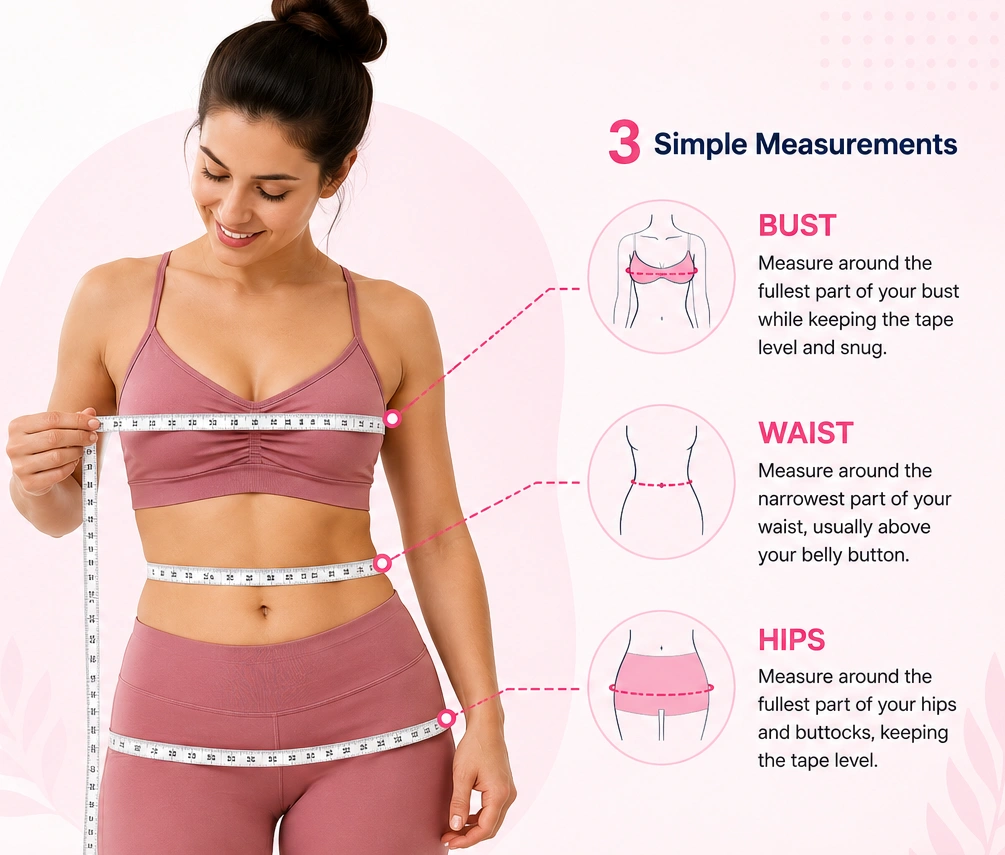
How to Measure Bust Waist and Hips
Learn How to Measure Bust Waist and Hips correctly with a flexible measuring tape. Follow three simple steps to take accurate BWH measurements, compare your body proportions and use the results in our free calculator.
Bust Waist Hip Measurement Calculator
Enter your bust, waist and hip measurements below to calculate your BWH numbers and compare your basic body proportions.
How to Measure Bust Waist and Hips Correctly
To understand How to Measure Bust Waist and Hips, start with a soft flexible measuring tape. Wrap it around the fullest part of your bust, around your natural waist, and around the fullest part of your hips and buttocks.
Keep the tape horizontal and comfortably snug without pulling it tightly into the skin. Stand naturally, breathe normally and use the same unit for all three measurements.
Why Accurate BWH Measurements Matter
Learning How to Measure Bust Waist and Hips accurately helps you get more consistent body measurements for comparing proportions.
Bust, waist and hip measurements are commonly written in that order. For example, 36–28–38 represents a 36-inch bust, 28-inch waist and 38-inch hips. These numbers are often called BWH measurements.
BWH numbers can describe relative upper-body, midsection and lower-body proportions, but they should not be treated as a universal standard for an ideal body. Natural body proportions vary widely from person to person.
If you also need shoulder measurements, chest measurements or a broader explanation of measurement points, visit our Body Measurements Guide .
How to Measure Bust Waist and Hips in 3 Easy Steps
Follow these steps in the same order each time to make your measurements easier to compare.
How to Measure Your Bust
Wrap a flexible tape around the fullest part of your bust. Keep it level across your back and comfortably snug against your body. Stand naturally rather than deliberately expanding or compressing your chest.
How to Measure Your Waist
Place the tape around your natural waist area. Keep it horizontal and flat against your body without pulling your stomach inward. The tape should touch your body without squeezing the skin.
How to Measure Your Hips
Wrap the tape around the fullest part of your hips and buttocks. Check the tape from the side or in a mirror to make sure it stays level instead of sloping upward or downward.
Bust Waist Hip Measurement Chart
Use this reference chart when learning How to Measure Bust Waist and Hips at home.
| Measurement | Where to Measure | Tape Position | Common Mistake |
|---|---|---|---|
| Bust | Around the fullest part of the bust | Horizontal across chest and back | Pulling the tape too tightly |
| Waist | Around the natural waist area | Level and comfortably snug | Holding the stomach inward |
| Hips | Around the fullest hips and buttocks | Horizontal around the lower body | Measuring too high on the hips |
Tips for Accurate Bust Waist Hip Measurements
Once you know How to Measure Bust Waist and Hips, use the same technique each time you remeasure.
✓ Do This
✕ Avoid This
What Do Bust Waist Hip Measurements Mean?
BWH stands for Bust, Waist and Hips. The measurements are usually written in that order, such as 36–28–38. The first number represents bust circumference, the second waist circumference and the third hip circumference.
Comparing these measurements can help describe proportional differences rather than only absolute size. Ratios can also make comparisons easier because they remain the same when all measurements are recorded in the same unit.
Can BWH Measurements Determine Your Body Shape?
Knowing How to Measure Bust Waist and Hips gives you useful information about your body proportions, but those three measurements alone may not identify every body shape.
Shoulder width is also useful when distinguishing between some female body shapes. Two people can have similar bust, waist and hip numbers but different shoulder proportions.
For a more complete result, add your shoulder measurement and use our Female Body Type Calculator . It compares shoulders, bust, waist and hips to estimate the body-shape pattern that most closely matches your proportions.
Should You Measure BWH in Inches or Centimeters?
You can use either inches or centimeters. The important rule is to use the same unit for the bust, waist and hips in one calculation.
One inch equals exactly 2.54 centimeters. To convert inches to centimeters, multiply the measurement by 2.54. To convert centimeters to inches, divide by 2.54.
Authoritative measurement resources: See the National Institute of Standards and Technology (NIST) Unit Conversion guide for official U.S. measurement conversion information. For guidance covering waist circumference, hip circumference and waist-to-hip ratio methods, see the World Health Organization report on waist circumference and waist-hip ratio .
Before You Take Your BWH Measurements
When learning How to Measure Bust Waist and Hips, consistency is more useful than trying to force a particular number.
Use a similar measuring technique each time and avoid changing your posture deliberately. If you are monitoring measurements over time, measuring under reasonably similar conditions can make comparisons easier.
Clothing can also affect readings. Light, close-fitting clothing is generally easier to measure over than thick or bulky clothing. The measuring tape should lie flat rather than becoming twisted around the body.
What to Do After Taking Your Measurements
After learning How to Measure Bust Waist and Hips, use your measurements in the related tools below.
How to Measure Bust Waist and Hips FAQs
Quick answers about BWH measurements, measuring tape placement and body proportions.
How to Measure Bust Waist and Hips at Home?
Use a flexible measuring tape. Measure around the fullest part of the bust, your natural waist area, and the fullest part of your hips and buttocks. Keep the tape level and comfortably snug.
Where should I measure my bust?
Place the tape around the fullest part of your bust and keep it horizontal around your back. The tape should lie flat without compressing the body.
Where should I measure my waist?
Measure around your natural waist area while standing normally. Keep the tape level and do not deliberately pull your stomach inward.
Where should hip measurements be taken?
Measure around the fullest part of your hips and buttocks. Check that the measuring tape remains horizontal around your lower body.
What does BWH mean?
BWH stands for Bust, Waist and Hips. The measurements are normally listed in that order, for example 36–28–38.
Can I use centimeters for BWH measurements?
Yes. You can measure in either inches or centimeters. Use the same unit for all three measurements in one calculation.
Should the measuring tape be tight?
The tape should be comfortably snug and lie flat against the body. It should not squeeze the skin or hang loosely away from the body.
Can BWH measurements tell me my body type?
BWH measurements provide useful information about body proportions, but shoulders can also influence body-shape classification. Using shoulders, bust, waist and hips provides a more complete estimate.
Finished Measuring Your Bust, Waist & Hips?
Add your shoulder measurement and use all four numbers to estimate your female body shape.
♀ Find My Female Body Type →